



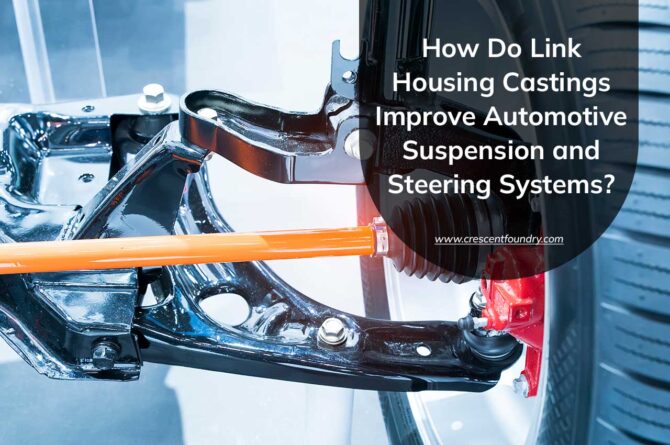
How Do Link Housing Castings Improve Automotive Suspension and Steering Systems
A vehicle’s operating capabilities are highly dependent on its suspension system as well as its steering system. The suspension and steering system complement each other to deliver stability, comfort and predictable handling characteristics. Link housings are a critical component of these systems. While link housings are generally rather overlooked, they provide the rigidity and support to keep suspension and steering systems operational.
What are link house castings?
In simple terms, link house castings are components that have been developed to house, secure and support the links in a suspension or steering system. It is used to properly link the different moving assembly components of the system and accept very high loads that are imposed by the normal driving conditions.
The term “casting” is significant. Unlike the parts that are manufactured using standard machining techniques, castings are made by pouring molten metal into a cavity that is shaped from that part. This process allows the link castings to be created with geometries which are complex but strong and lightweight. Once the raw casting is formed, the part goes through additional operations such as heat treatment, precision machining and surface finish as required by automotive manufacturing specifications.
Therefore, link housing castings are metal components that hold or connect links in a suspension or steering system. These components typically need to be made very strong due to the circumstances they’ll face. Every time a vehicle travels over bumps, holes, or other uneven terrain, the linked forces through suspension and steering must transfer through the link housing. Because of the load, link housings must be strong enough to handle the load and typically consist of high-strength metals like ductile iron or steel alloys, or, for modern vehicles, lightweight aluminium alloys.
How Do Link Housing Castings Contribute to Suspension System Performance?
Suspension systems are constructed to absorb shock, keep tyres in contact with the road surface and ensure driving comfort. Meanwhile, steering systems give the driver the ability to direct the vehicle safely and effectively. Here’s how link housing castings benefit these systems:
- Structural strength and stability
Both the suspension and steering systems are constantly under heavy dynamic loads. Each time a vehicle traverses over uneven terrain, the forces are distributed throughout many components. The link housing casting provides a rigid frame that holds all the components together.
- Precise alignment
One of the important functions of link house castings is to keep the suspension and steering components in an appropriate positional arrangement. Even slight misalignments can result in uneven tyre wear, poor handling or vibrations. High-quality link housing castings will preserve the geometry of the suspension to increase ride comfort and control.
- Vibration damping and reduction of noise
Vibrations and shocks from the road cannot be eliminated entirely, but the right castings can attempt to dampen these shocks. They provide stable housing which minimises vibrations that would otherwise be transferred to the steering wheel or cabin. This improves the overall riding experience and reduces the fatigue factor of driving.
- Improved resilience
Vehicles are subjected to various environmental stresses, such as potholes and rough roads, as well as temperature and humidity changes. Link housing castings are required to resist corrosion, fatigue, and wear over time. Castings that are durable allow the suspension and steering system to operate without constant repairs or replacement.
- Minimising weight
Modern vehicles are being built with efficiency in mind. The goal is to reduce the weight of the suspension components without reducing strength. Advanced casting methods will allow manufacturers to produce link housing castings that are lightweight yet durable, contributing to better fuel economy and handling.
Also Read: Is Your Car Shaking When Applying Brakes? 5 Causes You Should Know
The Role of Link Housing Castings Manufacturers
The function of link housing casting reflects the manufacturer’s competency. An experienced link house casting manufacturer will take time to focus on each of the following specifications for their products.
- Selecting alloys that maximise strength, weight and corrosion.
- Implementing precision castings, including investment castings, sand castings or die castings.
- Making sure the end part successfully fits into the suspension system as required.
- Testing for strength, fatigue and durability.
Final Thoughts
In the automotive sector, smaller parts can have a much bigger impact. Link housing castings may not be the most visible component to the driver, but their ability to keep the suspension travelling smoothly and steering engaged can be significant.
Selecting the correct link housing castings manufacturer is just as important. A manufacturer with experience, up-to-date technology, and quality assurance processes will ensure performance at the highest level for every casting.
FAQs
Q. What are link housing castings used for in vehicles?
Answer: They connect and support suspension and steering components, ensuring strength and alignment.
Q. Why are link housing castings important for safety?
Answer: They maintain suspension geometry and prevent failures that could affect steering control.
Q. What materials are commonly used for link housing castings?
Answer: Ductile iron, steel alloys, and lightweight aluminium alloys are most common.