



In different types of public as well as private infrastructure…
Designer Trench Grates: How They Transform Urban Infrastructure with Strength and Aesthetics
As urban areas continue expanding, the demands placed on drainage systems are becoming increasingly complex. Modern urban development requires solutions that ensure efficient stormwater management while also improving the appearance of public spaces. Traditional drainage covers often focus solely on functionality, whereas modern infrastructure projects seek a balance between performance, durability, and aesthetics.
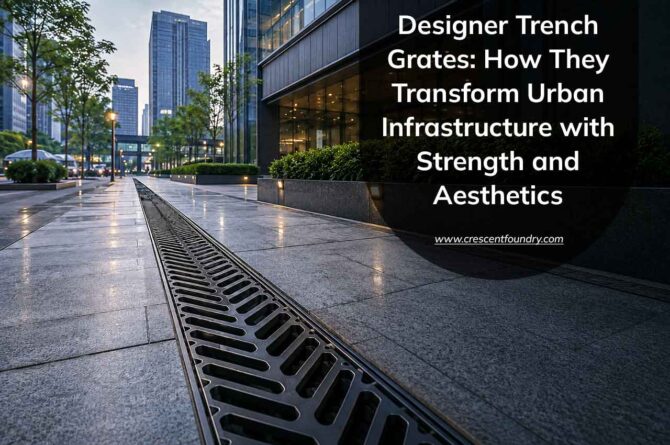
Designer trench grates are both functional and visually appealing, unlike conventional drainage covers. They are designed to enhance the visual quality of urban spaces while supporting efficient surface water drainage. With the growing emphasis on sustainable and aesthetically pleasing urban infrastructure, these advanced drainage systems have become an integral part of modern city planning.
Are Designer Trench Grates Suitable for High-Traffic Areas?
One of the key considerations when selecting a drainage solution is its ability to withstand continuous traffic loads. Drainage systems installed in busy roads, commercial complexes, transport hubs, and public spaces must maintain their structural integrity under constant usage.
Designer trench grates are specifically engineered to meet these requirements. Manufactured using ductile iron, they combine high strength, durability, and impact resistance. They are robust enough to withstand both pedestrian and vehicular traffic while maintaining effective drainage performance.
Additional features such as secure bolting, locking systems, and hinged provisions further enhance operational safety. These features help prevent accidental displacement and ensure safe access during maintenance activities. As a result, designer drainage grates are highly suitable for high-traffic areas where long-term reliability is essential.
Beyond strength, these systems are designed to integrate seamlessly with surrounding surfaces, ensuring that functionality does not compromise appearance. This combination makes them a preferred choice for urban infrastructure projects that prioritise both performance and aesthetics.
What Role Do Side Rails Play in Designer Trench Grates?
Side rails are among the most important structural components of designer trench grates. While the grate itself provides surface drainage and load-bearing capability, side rails are essential for ensuring the long-term stability, durability, and efficiency of the overall drainage system.
Designer drainage grates are supplied with side rails to ensure accurate alignment with the surrounding pavement, helping maintain structural integrity even in demanding urban environments.
Better load distribution
One of the major advantages of side rails is their ability to distribute loads more evenly across the drainage channel and surrounding pavement. Uneven load transfer can create stress concentrations in areas exposed to pedestrian or vehicular traffic, leading to premature wear and structural damage.
Improved Stability
Stability is essential for designer drainage grates to function reliably, especially in high-traffic environments. Side rails strengthen the connection between the grate and surrounding surfaces, helping prevent movement or displacement of the system.
Enhanced Pavement Protection
The performance of designer trench grates is closely linked to the condition of the adjacent pavement. Uneven load transfer can cause pavement edges to crack, settle, or deteriorate over time.
Side rails improve load distribution and help protect these critical areas. This reduces the likelihood of pavement damage while enhancing the longevity of both the drainage system and the surrounding urban infrastructure.
Extended Service Life
Durability is a major consideration in modern drainage design, and side rails play a critical role in extending the service life of designer drainage grates. By improving load management, alignment, and structural stability, they help minimise wear and tear on both the grate and the supporting infrastructure.
Final Thoughts
The evolution of urban infrastructure requires solutions that go beyond basic functionality. Designer trench grates meet this expectation by offering effective drainage, superior strength, and visually appealing finishes. Constructed from durable ductile iron and designed for high-traffic environments, these systems provide long-term reliability and performance. Integrated side rails further improve structural stability and load distribution.
Designer trench grates combine performance-driven engineering with modern design to help create safer, more resilient, and aesthetically appealing urban spaces. As infrastructure projects continue to evolve, these systems remain a reliable and future-ready solution for long-term drainage performance.
FAQs
Q. What material is commonly used for designer drainage grates?
Answer: High-quality ductile iron is commonly used due to its strength, impact resistance, and long service life.
Q. Can designer drainage grates be customised for different projects?
Answer: Yes, they can be supplied with features such as locking systems, bolting options, hinged access, seals and GRP provisions.
Q. How do designer drainage grates contribute to Urban Infrastructure?
Answer: They improve drainage efficiency, enhance public safety and support the aesthetic and structural requirements of modern Urban Infrastructure.
Q. What are the maintenance benefits of designer drainage grates?
Answer: Their durable construction and stable design help reduce maintenance needs and ensure long-term performance.
Q. What makes designer drainage grates different from conventional trench grates?
Answer: Designer Trench Grates combine effective drainage performance with an aesthetic design that complements modern urban developments.
Q. Where are designer drainage grates commonly installed?
Answer: They are widely used in roads, plazas, commercial complexes, transport hubs, walkways and smart city projects.