

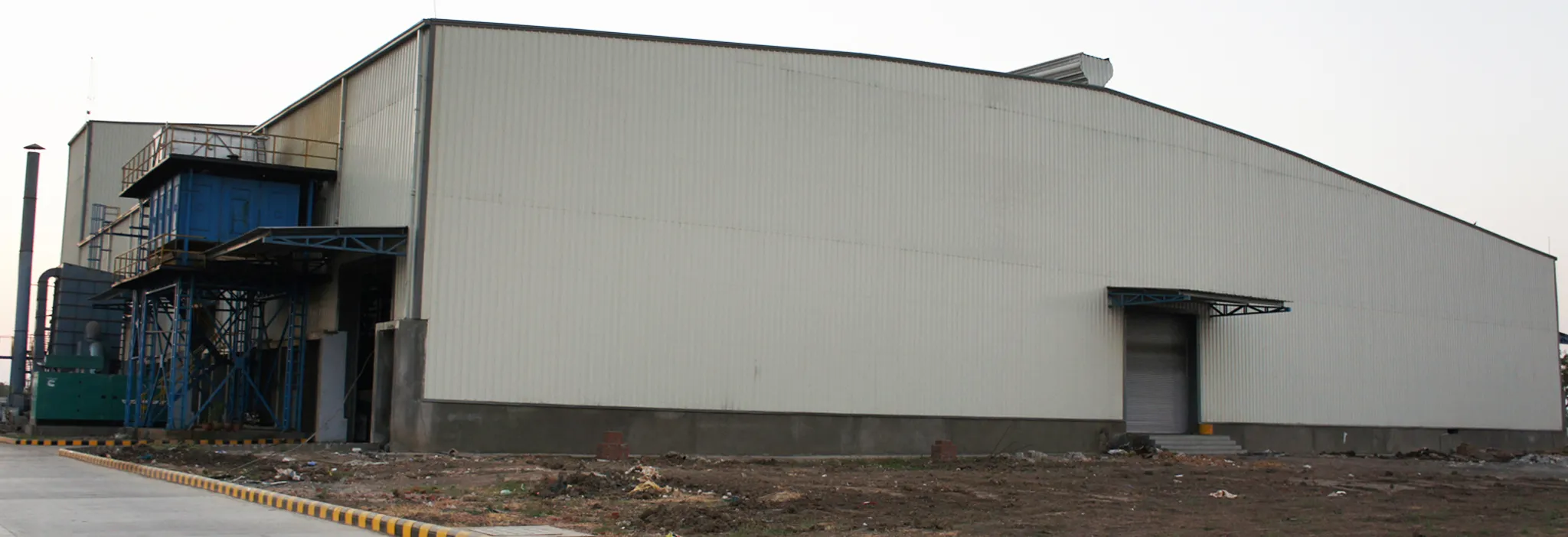


Industries today heavily rely on casting products to operate and…
Counterweight Castings: Why Vacuum Moulding Ensures Superior Quality
In applications where balance, stability and safety are imperative, the quality of counterweight castings is a determining factor. In forklifts, tractors, marine ballast systems and aerial work platforms, counterweights must adhere to high standards of accuracy, durability and strength. Among the casting processes that have always produced outstanding results is the V-process, or vacuum moulding process.
The V-Process involves the use of dry, unbonded sand and thin sheets of heated plastic film that harden in a vacuum pressure environment, as opposed to chemical binder processes. The absence of binders and the use of vacuum pressure to hold the mould together make this process ideal for counterweight casting.
What Are the Differences Between Traditional Sand Casting and Vacuum Moulding?
The traditional green sand casting process uses sand mixed with clay and water to bind it together. It’s a very common process: it’s cheap and easy to scale. However, this water and binding agent can cause problems with surface finish, dimensional accuracy, and subsequent finishing to smooth out defects.
The V-process, or vacuum moulding, employs completely dry, unbonded sand. A thin plastic sheet is heated and placed over the pattern, and the sand is hardened by vacuum pressure, producing a precise mould cavity without the use of any chemical binder.
Key differences include:
- Binder-free moulding: No chemical additives reduce contamination and improve surface finish.
- Higher dimensional accuracy: Vacuum pressure ensures tight compaction and sharper mould details.
- Reduced defects: Absence of moisture minimises gas-related defects.
- Better environmental profile: No harmful binder fumes during pouring.
For counterweight castings, where dimensional consistency directly impacts equipment balance and safety, these differences are significant.
How Does Vacuum Moulding Improve Accuracy and Surface Quality?
Accuracy is a crucial aspect of counterweight manufacturing. Any slight variation in dimensions can affect the balance and safety of the equipment. The V-process, or vacuum moulding, enhances accuracy in the following ways:
1. High Dimensional Stability
The vacuum pressure forces the sand evenly around the mould, creating sharp corners and accurate contours. This ensures that every counterweight corresponds to the precise specifications.
2. High Surface Finish
The absence of binders and water in the mould results in a cleaner surface for the metal to fill. This results in a smoother casting with minimal surface defects, reducing the need for machining.
3. Reduced Casting Defects
Gas porosity and sand-related inclusions are significantly minimised. The dry sand system eliminates the steam generation common in traditional moulds, improving overall casting integrity.
4. Consistency Across Batches
Vacuum moulding offers repeatable results, which is essential when manufacturing large volumes of counterweight castings for industrial equipment manufacturers.
The outcome is a product that not only looks refined but also performs reliably under demanding operational conditions.
Why Is Vacuum Moulding the Better Choice for Counterweight Manufacturing?
Counterweights are not decorative components; they are functional, safety-critical parts. Whether used in forklifts, marine applications, tractors or AWPs, their performance directly affects operational stability.
The V-process (vacuum moulding process) is particularly well-suited for counterweight production because:
- High Density and Structural Strength: The process supports uniform metal solidification, enhancing mechanical properties.
- Excellent Weight Accuracy: Precise mould formation ensures correct mass distribution.
- Reduced Post-Processing: Cleaner castings mean lower finishing costs and faster turnaround.
- Sustainability Benefits: Recyclable dry sand and elimination of chemical binders contribute to environmentally responsible manufacturing.
At Crescent Foundry, the secret to our high-quality counterweights is our vacuum moulding process. Being the first and largest counterweight foundry in India to employ this advanced casting technology, we offer green sand, vacuum moulding, and lost foam processes to cater to different requirements.
Our product line includes forklifts, marine ballasts, tractors, aerial work platforms (AWPs), and many others. Every counterweight is carefully designed to meet exacting standards, offering a perfect blend of quality, performance, ease of use, and safety. They also accommodate custom requirements based on specific buyer specifications.
Also Read: Maintenance Tips for Counterweights in Aerial Work Platforms
The Competitive Advantage of the V-Process
In a market where quality, consistency and compliance are non-negotiable, the V-process (vacuum moulding process) provides a measurable advantage. Its ability to deliver:
- High surface quality
- Accurate weight control
- Structural reliability
- Cleaner production processes
These advantages are the preferred solution for high-performance counterweight castings.
As industries increasingly demand high-quality components with minimal environmental impact, vacuum moulding stands out as a forward-looking casting technology. For manufacturers seeking long-term durability, operational safety and superior finish in counterweights, the V-Process is not just an alternative; it is the benchmark for excellence.
FAQs
Q. What is the V-process (vacuum moulding process) in casting?
A. The V-process (vacuum moulding process) uses dry sand and heated plastic film, stabilised by vacuum pressure instead of binders, producing precise mould cavities with superior surface finish and dimensional consistency.
Q. Why is vacuum moulding ideal for counterweight castings?
A. Vacuum moulding ensures accurate weight distribution, smoother surfaces and reduced internal defects, which are essential for maintaining stability, safety and performance in heavy industrial equipment applications.
Q. Does the V-process reduce casting defects?
Yes, the absence of moisture and chemical binders significantly reduces gas porosity, blowholes and inclusions, resulting in structurally sound and reliable counterweight castings with improved mechanical properties.
Q. How does vacuum moulding improve sustainability?
A. The process uses recyclable dry sand and eliminates chemical binders, reducing harmful emissions, waste generation and environmental impact while maintaining consistent quality in casting production.
Q. Is vacuum moulding suitable for customised counterweights?
A. Yes, the V-process (vacuum moulding process) supports customised designs, complex geometries and precise dimensional requirements, making it suitable for tailored counterweight castings across multiple industrial sectors.
Q. What industries benefit most from vacuum-moulded counterweights?
A. Industries such as material handling, agriculture, marine, construction and aerial work platforms benefit significantly, as expertly engineered counterweight castings enhance equipment balance, operational safety and long-term durability.